
We Skipped April Fools' This Year
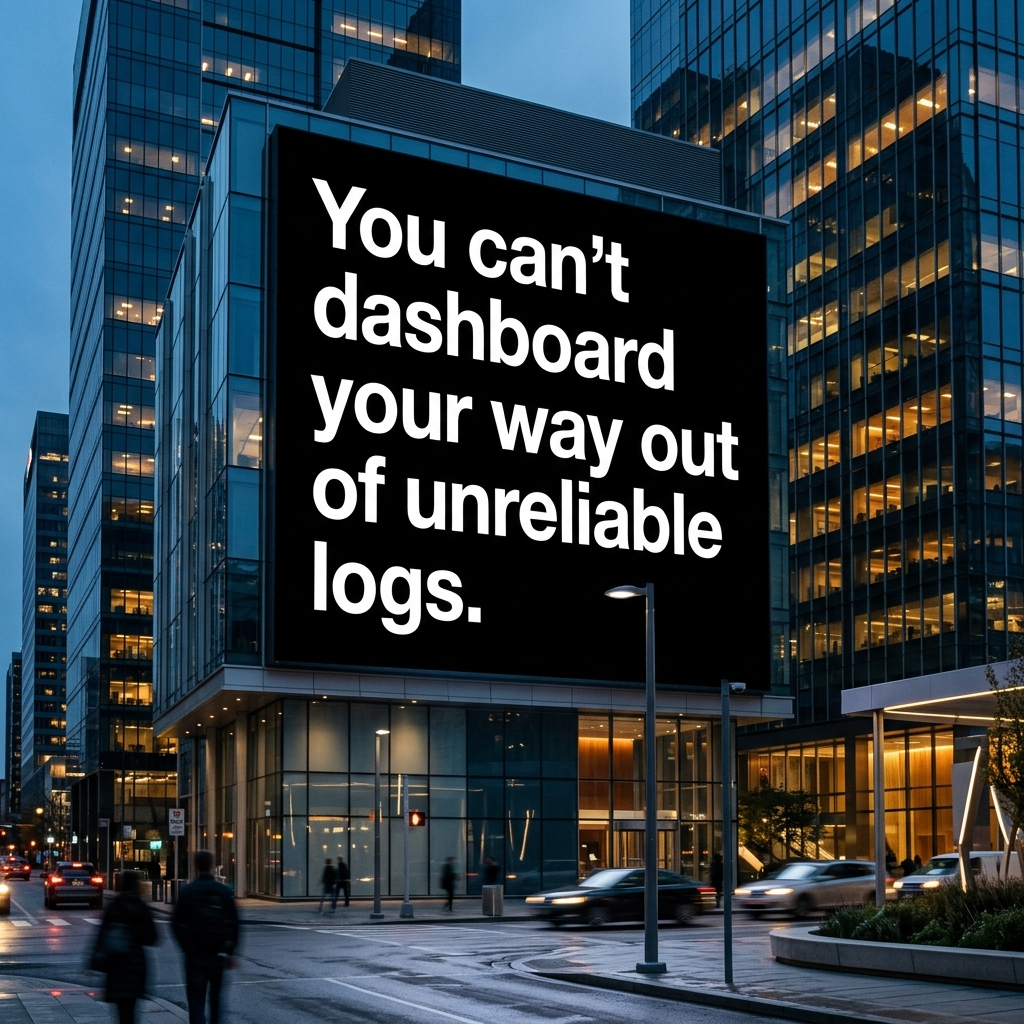
We've got enough practical jokes running in production already.
Tools that promise complete visibility but can't normalize basic logs. Alerts firing at 3pm for reasons nobody understands. Dashboards. More dashboards to explain why the first dashboard didn't work.
Reading vendor whitepapers feels like April 1st anyway.
The Dashboard Explosion Isn't Solving Problems
You know what kills us? These aren't even security problems.
They're data engineering failures with a SIEM license.
Your team spends hours reconciling conflicting views of the same event. Three different dashboards show three different numbers. The logs lie. Events disappear. Timestamps drift. Normalization never happened.
So what does your vendor suggest? Another dashboard.
The pattern is clear once you see it. When you can't trust your data, you build more views hoping one will show the truth. It never does. You just get better at explaining why the numbers don't match.
Most Security Problems Are Data Problems
We've worked with SOC teams across government and enterprise environments. The conversation is always the same.
"Our alerts don't make sense."
"We can't track threats across systems."
"We need better visibility."
Translation: Our data pipeline is broken, and we're trying to fix it with visualization.
It doesn't work. You can't dashboard your way out of unreliable logs. You can't visualize events that never made it through your pipeline. You can't normalize data that was never structured correctly in the first place.
The real cost isn't the SIEM license. It's the analyst time spent chasing ghosts through broken infrastructure.
Vendors Know What They're Doing
Dashboards are cheaper to build than fixing the underlying platform.
Broken infrastructure creates desperate buyers. Teams that can't trust their data will pay for anything that promises clarity. So vendors sell visualization as the solution.
It's not malicious. It's just easier than admitting the problem is structural.
Your logs need to be reliable before they're pretty. Your events need to arrive before you can analyze them. Your normalization needs to work before you can correlate anything.
Build the pipeline first. Add the dashboard later.
What Actually Works
We're not saying dashboards are useless. We're saying they're step five, not step one.
Start with data infrastructure that doesn't lie. Build pipelines that don't drop events. Implement normalization that actually normalizes. Make sure your timestamps mean something.
Then visualize.
When your data is reliable, you don't need seventeen dashboards. You need one that shows the truth.
No pranks from us this year. We'll be building infrastructure that works instead.
If your security stack has enough comedy already, you're not alone. Most organizations are drowning in tools that promise everything and deliver confusion.
The fix isn't another layer of pretty graphs. It's infrastructure that makes those graphs possible in the first place.